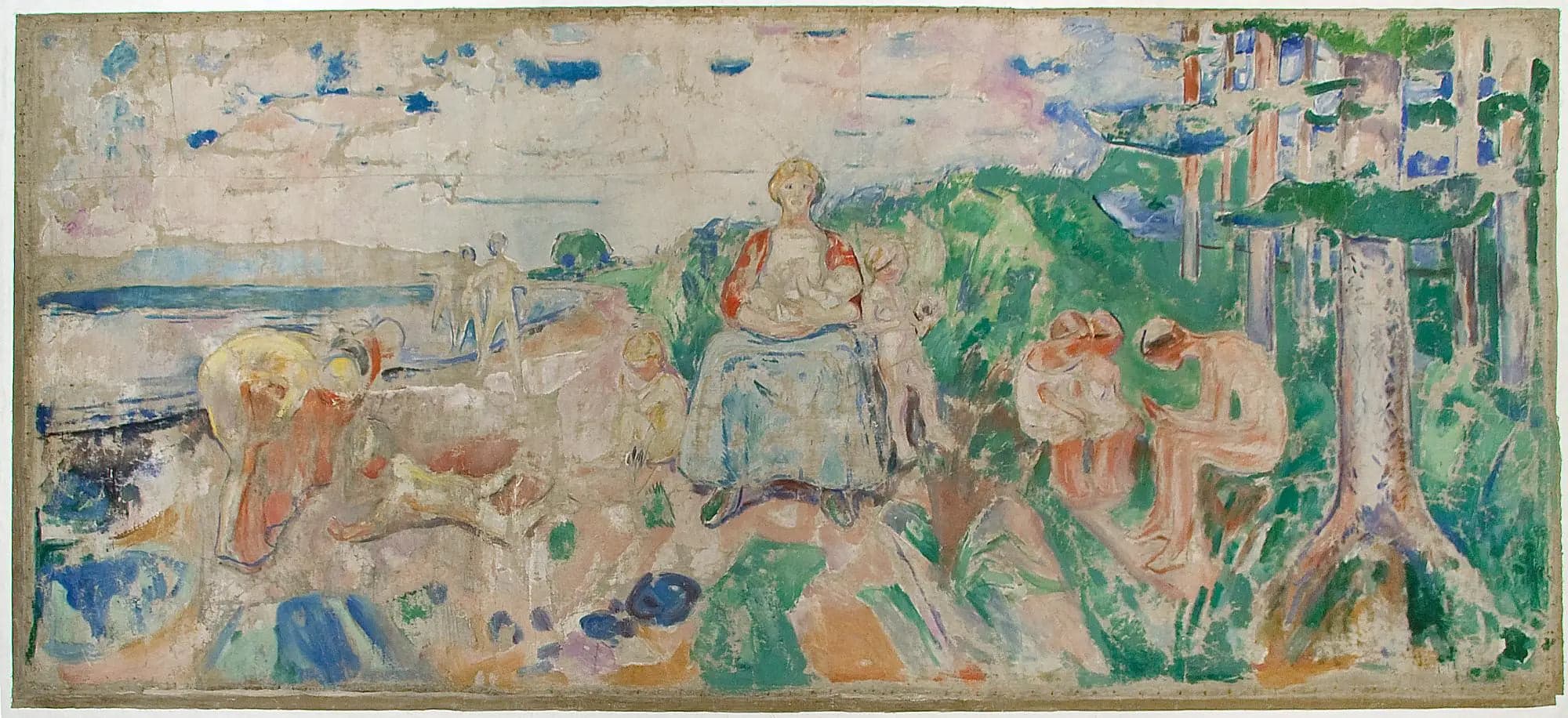
Alma mater
- Original dimensions
- 165 x 71.5 cm
- Museum
- Munch Museum
- Year
- 1912
Scene depicted
"Alma mater," this poignant painting , celebrates the academic and emotional bonds that young adults have with their university. Through stylized figures and a delicate composition, Munch evokes an atmosphere that is both joyful and melancholic, translating the transition to adulthood, hope, and the fragile feeling of fading memories.
Historical context
Created in 1912 in the vibrant city of Oslo, the painting "Alma mater" is part of the symbolist movement, an influential artistic movement of the late 19th and early 20th centuries. It was during this time that Munch, already recognized for his unique vision, drew from his own experiences to create this moving canvas . In this historical moment, art is reinventing itself, confronting the deepest human emotions, and breaking free from classical conventions. Currently, this iconic work is displayed at the Munch Museum in Norway, a sanctuary dedicated to his legacy.
Place in the artist's career
This canvas embodies a significant milestone in Munch's career, situated between his darker works such as "The Scream" and his brighter explorations in "The Madonna." It marks the maturity of his style as he refines his ability to capture human emotions, thus creating a bridge between the light and darkness of human experience.
Anecdote
"Life is a poem, and each masterpiece is a stanza." These words resonate in the mind when considering Munch's creative process. Imagine him, one spring morning, wandering through the peaceful streets of Oslo, observing the light playing on the faces of students, thus inspiring the breath of this canvas marked by tenderness and nostalgia.