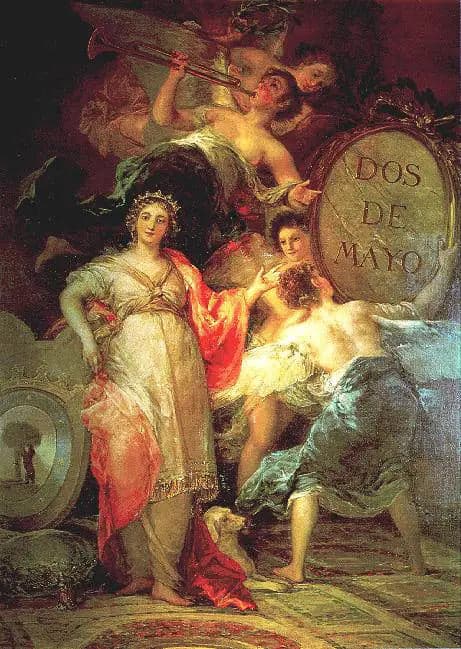
Allegory of the City of Madrid
- Original dimensions
- 195 x 260 cm
- Museum
- Madrid History Museum
- Year
- 1809
Scene depicted
In this iconic painting , Goya depicts the majesty of Madrid through allegorical figures, evoking themes such as prosperity, freedom, and the dignity of its inhabitants. The canvas illustrates a dynamic composition, full of life and symbolism , where each figure seems to tell a story, inviting the observer to discover the subtleties of the Spanish capital.
Historical context
Created in 1809, in the heart of the city of Madrid, this painting is part of the romantic movement, characterized by its intense expressiveness and deep attachment to national identity. At that time, Madrid is the stage for social and political upheavals, reinforcing Goya's creative impulse, an artist who continually explores the complexity of the human soul. The canvas , now preserved in the Madrid History Museum, captures attention with its impressive dimensions that encapsulate the essence of a city in transformation.
Place in the artist's career
The painting “Allegory of the City of Madrid” is part of Goya's artistic maturity period, a golden age where his style unfolds with strength. Like “Las Meninas” by Velázquez and “Saturn Devouring One of His Sons,” it illustrates the evolution of his expression, between the exploration of light and the psychological study of characters.
Anecdote
“Art is the mirror of our society, it must scream when words are whispered.” This thought resonates in Goya's mind as he strolls one spring morning through the sunlit streets of Madrid. It is in this soft light that he draws inspiration for his masterpiece , a vibrant pictorial work that will eternally capture the soul of his beloved city.