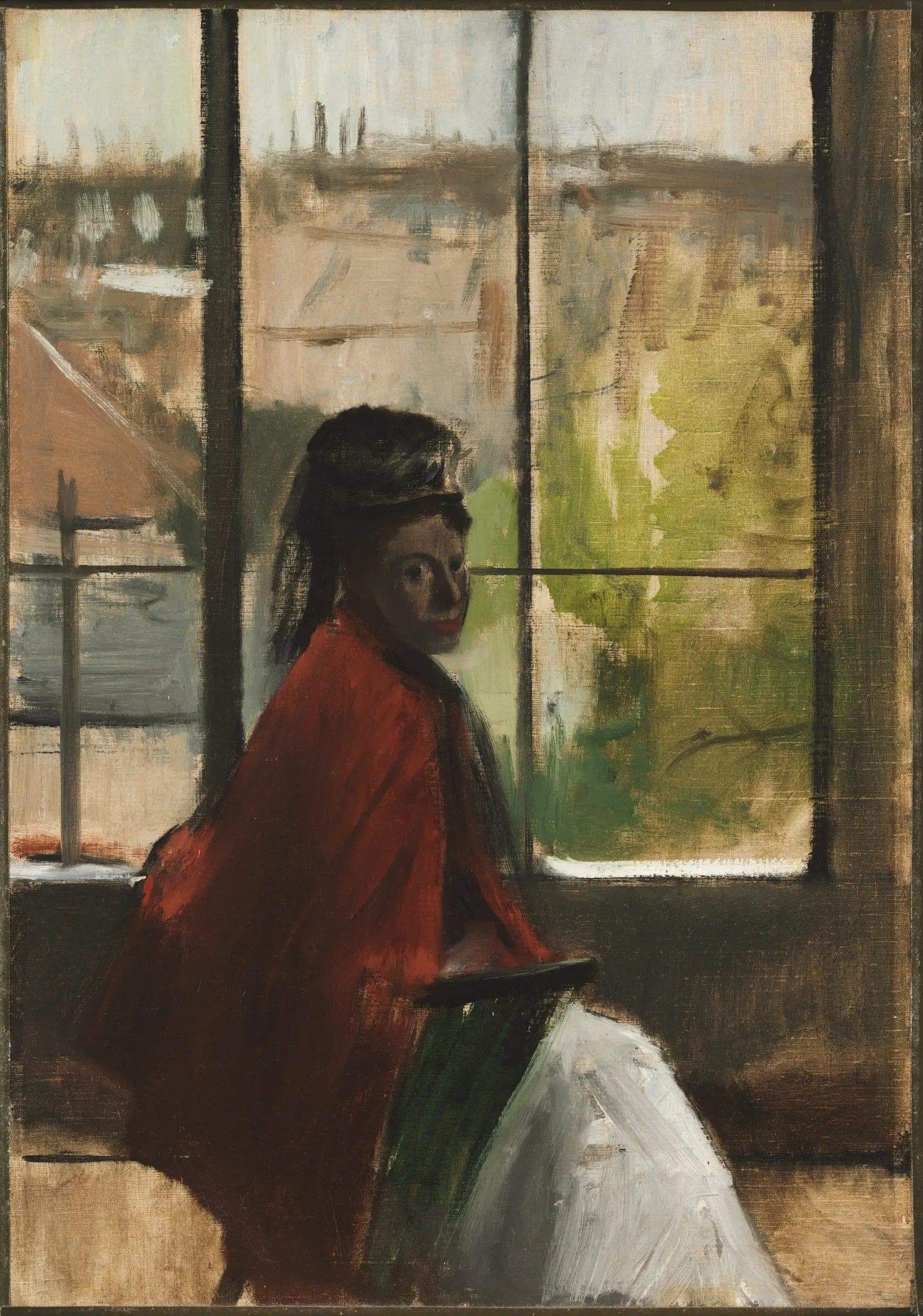
Alice Villette
- Original dimensions
- 33 x 46.5 cm
- Museum
- Fogg Art Museum
- Year
- 1872
Scene depicted
This pictorial work captures the portrait of young Alice, highlighting the grace and serenity of a fleeting moment. The contemplative gaze of the muse, gentle and soft, invites reflection on the lightness of childhood and the passage of time. Degas, with his keen sense of detail and love for depicting ballerinas and women in everyday life, transforms this canvas into a true testament of emotion and life.
Historical context
Created in 1872, the painting "Alice Villette" emerges in the vibrant context of post-Haussmannian France, where modern art begins to forge its own identity. Intimately linked to Impressionist currents, this canvas represents an intense exploration of themes of light and movement. Currently housed at the Fogg Art Museum , this painting reveals the dimensions of intimacy and fleeting beauty, capturing a moment of daily life with remarkable finesse.
Place in the artist's career
With "Alice Villette," Degas reaches a period of artistic maturity. At the time, he was already exploring intimate subjects, as evidenced by his other famous paintings "The Dancer at the Window" and "Absinthe," where technique and emotion intertwine. This painting stands as a centerpiece of his legacy, affirming his unique style between realism and impressionism .
Anecdote
"Beauty is in ordinary life; you just have to know where to look for it." These words from Edgar Degas resonate strongly when evoking the genesis of the masterpiece "Alice Villette." The inspiration for this painting was born at the turn of a Parisian alley, on a cool spring morning where the scent of flowers mingles with the soft murmurs of the city.