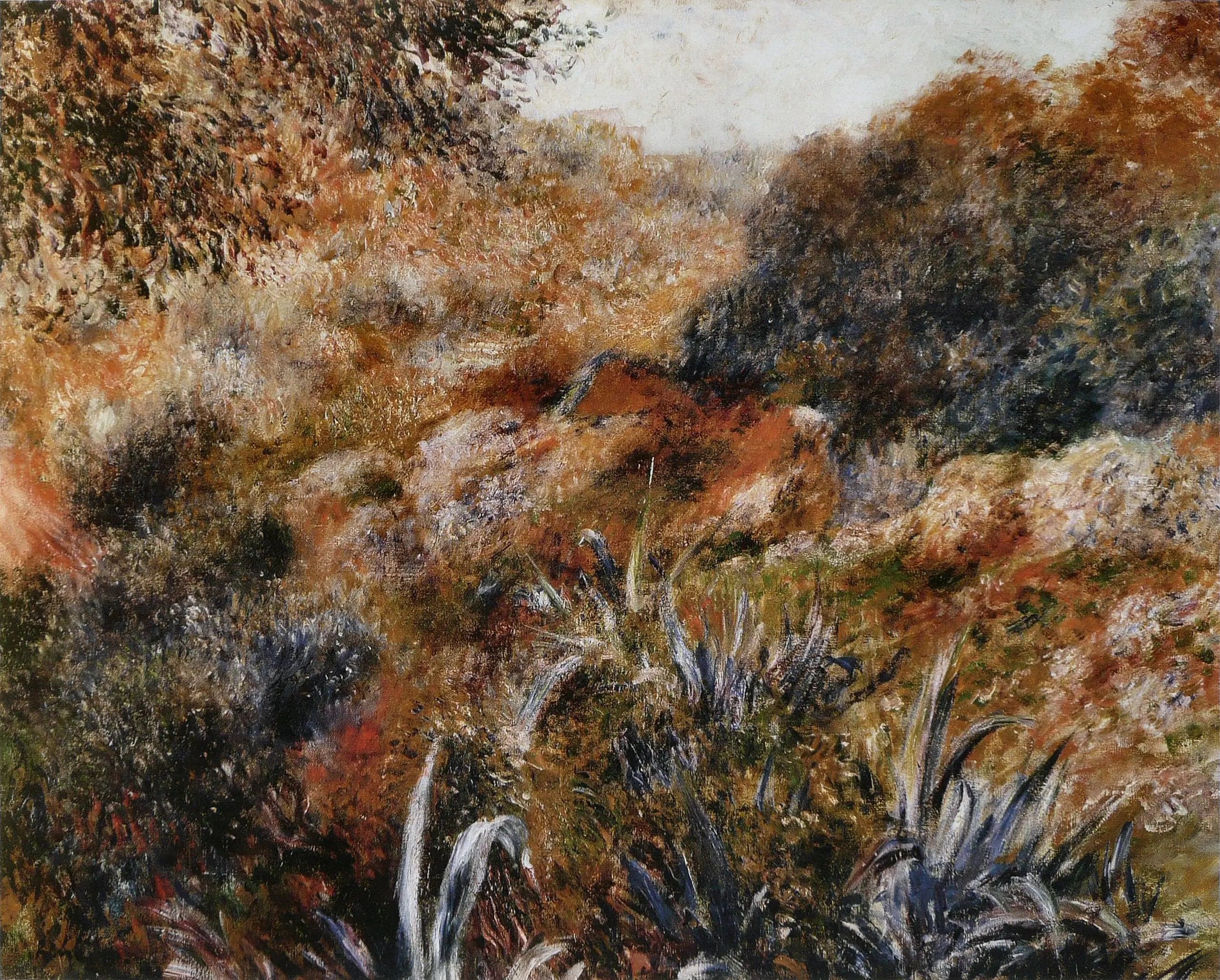
Algerian Landscape, the Ravine of the Wild Woman - Pierre
- Original dimensions
- 81 x 65.5 cm
- Museum
- Orsay Museum
- Year
- 1881
Scene depicted
This canvas illustrates a lush ravine, where nature flourishes in all its splendor. Renoir depicts a wild woman as the central figure, symbolizing the intimate relationship between man and nature. The composition evokes a suspended moment, where the viewer's gaze is guided by the curves of the earth and the dance of the foliage.
Historical context
Created in 1881, in the vibrant city of Paris at the heart of France, this painting is part of the iconic works of the Impressionist movement, an artistic current that captured the light and emotion of a fleeting moment. It is within the Orsay Museum that this canvas currently resides, offering admirers an immersion into the colorful and luminous universe of Renoir.
Place in the artist's career
Integrated into Renoir's career, this canvas marks a period of Impressionist maturity Impressionist . Comparable to works such as “Luncheon of the Boating Party” and “The Bathers,” it reflects the evolution of his technique, moving from a more academic approach to a bold exploration of light and form.
Anecdote
“Light is everything in nature, and that is what inspires me,” Renoir might have expressed during the creation of this masterpiece . Imagine him on the sun-drenched shores of a spring morning, contemplating the wild beauty of the Algerian landscape surrounding him, each shade of color an invitation to capture the essence of life.