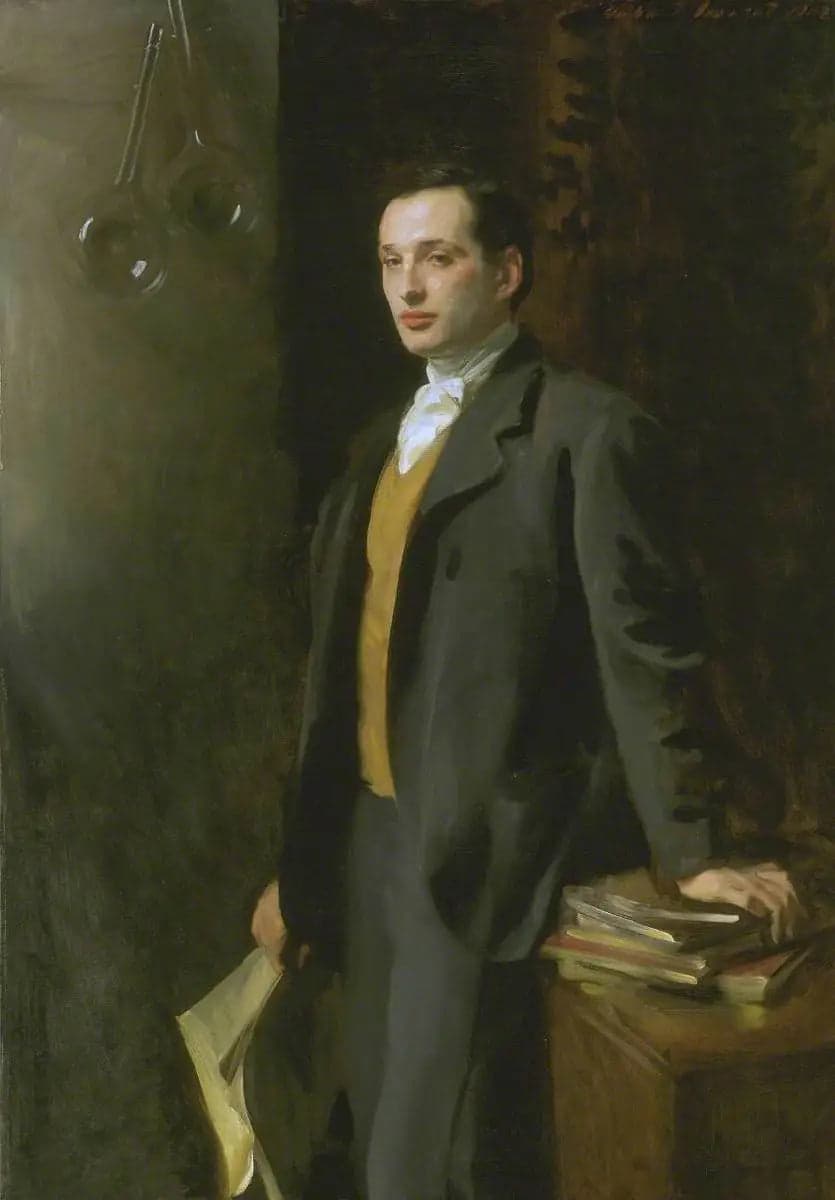
Alfred, son of Asher Wertheimer
- Original dimensions
- 163 x 115 cm
- Museum
- Tate
- Year
- 1901
Scene depicted
In this pictorial work, Sargent captured the essence of Alfred, a noble heir with a penetrating gaze. The background, subtly blurred, highlights the central character, creating an atmosphere of intimacy and sophistication, while allowing the viewer to imagine a story beyond the canvas. The meticulous details of the young boy's clothing and features evoke an instant connection.
Historical context
Created in 1901, this iconic painting was born in the vibrant context of London, an emblematic city and epicenter of British artistic culture. John Singer Sargent , at the height of his career, is part of the portraiture and realism movement, capturing intimately human moments on sublime canvas. Currently housed at the Tate , this masterpiece of 163 x 115 cm transports us to a time when art and society lived in perfect harmony.
Place in the artist's career
This painting is situated at a major turning point in Sargent's career. A look back at earlier works such as “Madame X” and “Carnation, Lily, Lily, Rose” reveals the evolution of his style. Alfred, son of Asher Wertheimer bears witness to unparalleled mastery, where light and texture intertwine, marking a step towards the maturity of his art.
Anecdote
“Every face tells a story,” Sargent reportedly stated during the creation of this painting. Imagine a spring morning, where in the soft light, young Alfred presented himself before the painter. This fleeting encounter gave rise to a work that transcends time, evoking unmatched tenderness and depth.