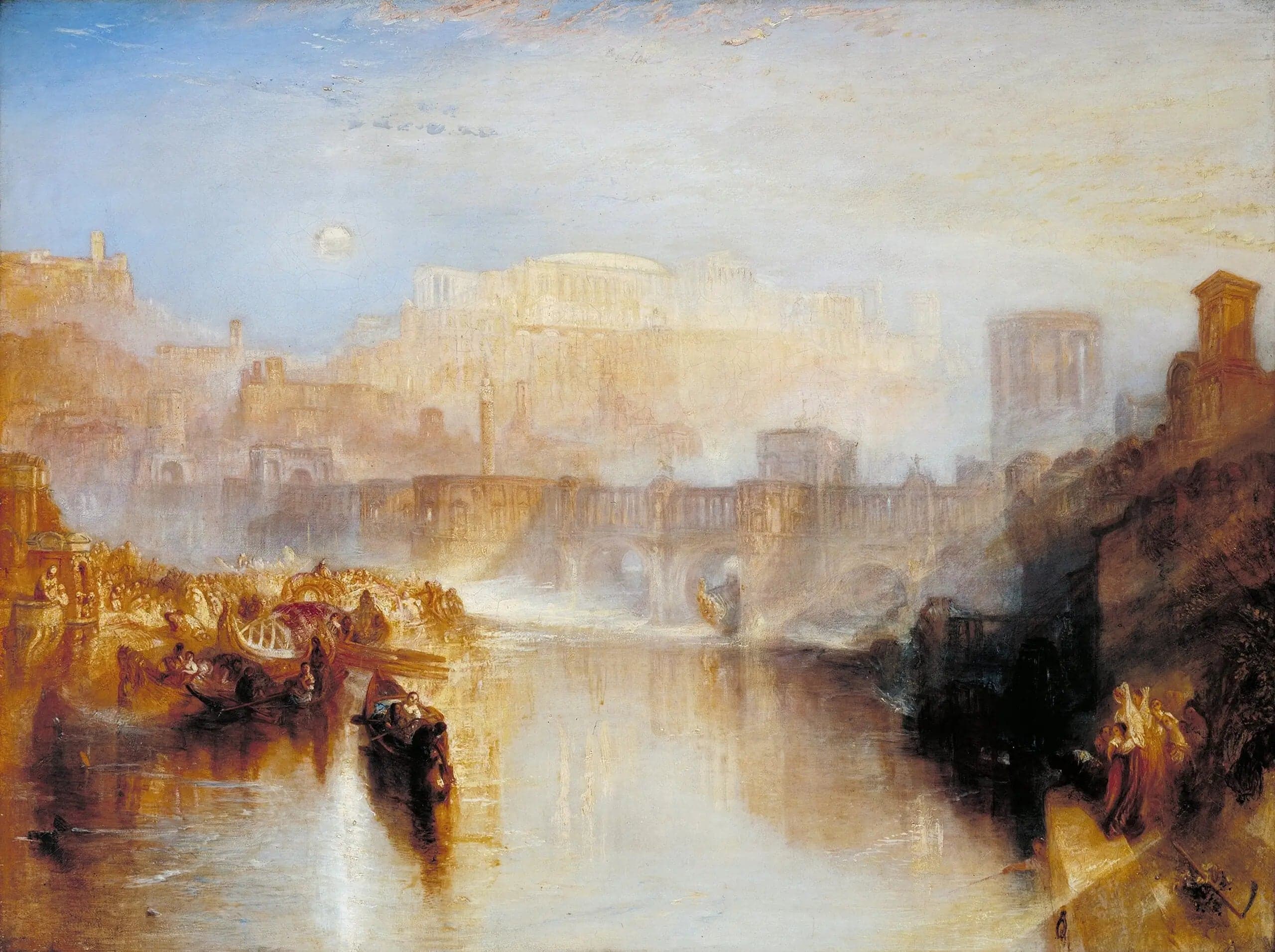
Agrippina Landing with the Ashes of Germanicus
- Original dimensions
- 121 x 90 cm
- Museum
- Not specified
Scene depicted
The painting depicts a poignant moment in Roman history: the return of Agrippina, widow of Germanicus, to the shores of Italy with her husband's ashes. This painting illustrates not only a tragic scene but also the love and courage of a woman in the face of adversity. The human figures, surrounded by opulent nature, convey a profound message of memory and sacrifice, enveloping the viewer in an atmosphere imbued with nobility.
Historical context
Created in the early 19th century, in the troubled context of a post-Napoleonic Europe, the painting "Agrippina Landing with the Ashes of Germanicus" reflects the emotional and historical impact of its subject. Located in Paris, not far from the major European artistic movements, this work belongs to the Romantic period, a movement rich in emotions and dramatic narratives. Currently, the painting is preserved in a private collection, a treasure of history and light.
Place in the artist's career
"Agrippina Landing with the Ashes of Germanicus" is a major work in Turner’s career, marking his transition to a more expressive style. The painting follows works like "The Bridge of Leith" and precedes "The Last Voyage of the Temeraire," reflecting a notable technical evolution, with an increasing emphasis on emotion and light through painting .
Anecdote
Joseph Mallord William Turner , known for his obsession with light and color, reportedly stated: "Light is everything, light is life." It is this philosophy that led him to create this masterpiece , inspired by the power of ancient tales. The inspiration came to him during a walk along the Thames, where the play of light on the water evoked memories full of melancholy and grandeur. This original emotion resonates through every brushstroke of this canvas .