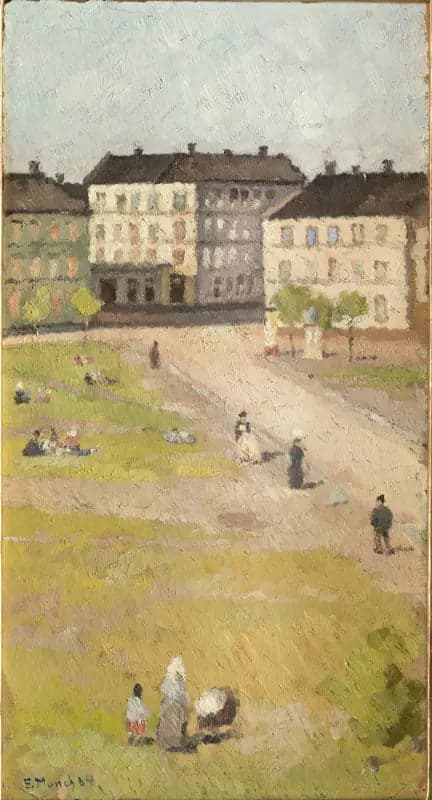
Afternoon on Olaf Rye Square
- Original dimensions
- 25.5 x 48 cm
- Museum
- Moderna Museet
- Year
- 1884
Scene depicted
This pictorial work depicts a sunny afternoon on the Olaf Rye Square, a lively scene bathed in golden light. Characters stroll, conversations are whispered, and the everyday transforms into a visual dance. Through this painting, Munch manages to capture not only the environment surrounding him but also the very essence of human relationships. Each character seems to embody a moment of tenderness or melancholy, revealing the multiple facets of the human condition.
Historical context
Created in the artistic context of the late 19th century in Oslo, this precious painting is at the heart of the symbolist movement. At a time when individual expression and the psychology of color gain importance, the canvas "Afternoon on the Olaf Rye Square" reveals the sensitivity of Edvard Munch , integrating both elements of daily life and a complex emotional introspection. Currently exhibited at the Moderna Museet, this canvas deserves to be admired for its delicate dimensions, capturing the very essence of its time.
Place in the artist's career
“Afternoon on the Olaf Rye Square” marks a turning point in the career of Edvard Munch , a promising young artist at the time. Compared to his later works like “The Scream” or “The Madonna,” this painting reveals an initial step in his exploration of light and emotions, themes that will become emblematic in his work. Here, the artist begins to articulate his unique visual language, positioning this canvas as a starting point for his overflowing creativity.
Anecdote
“The light of an afternoon, when everything seems possible, inspires me.” These words from Edvard Munch evoke the fleeting moment of inspiration captured in this scene. Imagine the whisper of leaves caressed by the wind, the scent of spring flowers, and the softness of the sun; these vibrant elements intertwine to bring the painting to life.