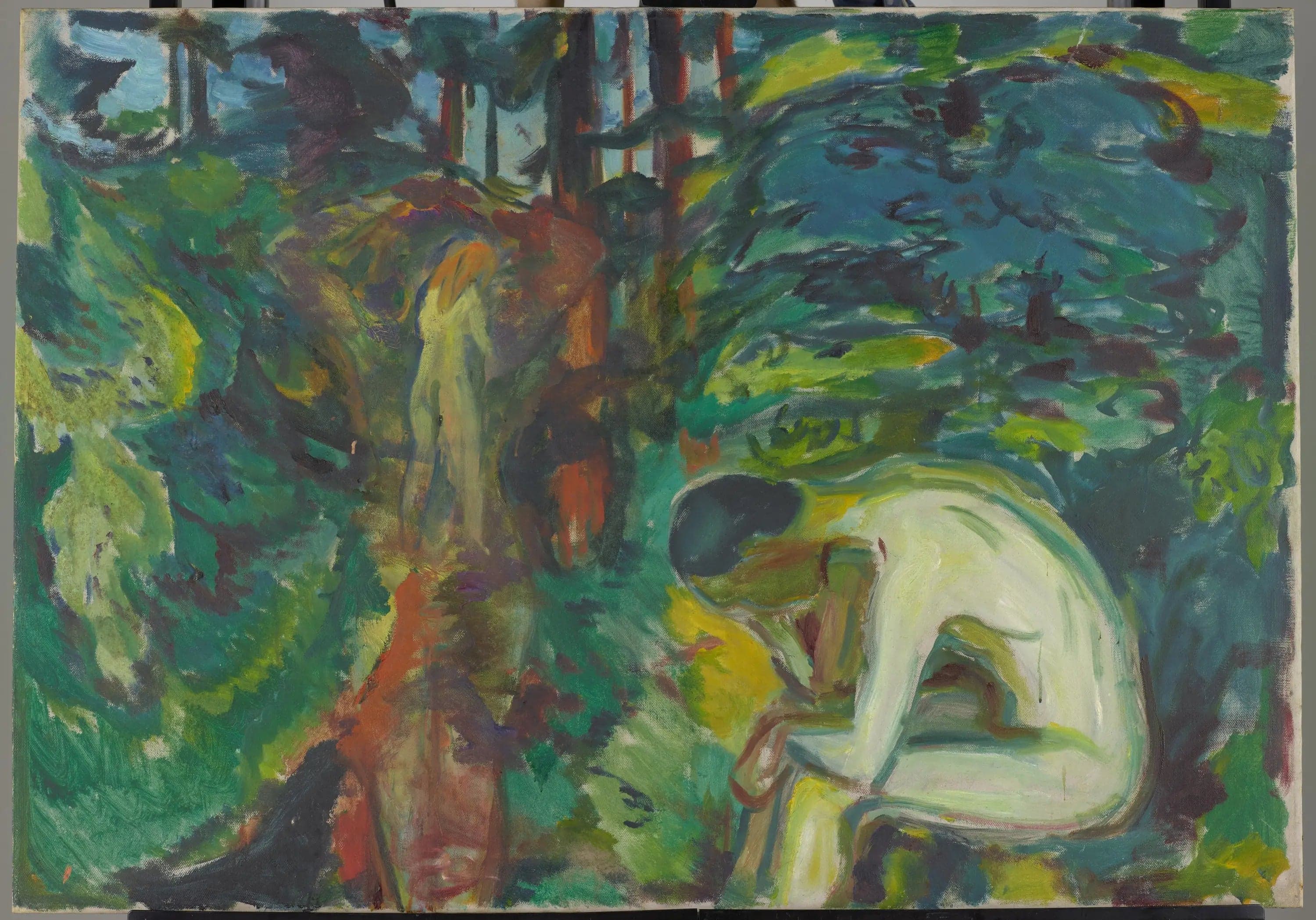
After the Fall
- Original dimensions
- 113.5 x 80 cm
- Museum
- Munch Museum
- Year
- 1924
Scene depicted
“After the Fall” captures a delicate moment: a moment of vulnerability after a tragic event. The work highlights the inner conflict of man facing his trials. The characters, imbued with a melancholic air, evoke a sense of solitude and loss, reflecting the complexity of human emotions.
Historical context
Created in 1924, this painting is part of the expressionist movement and finds its origins in Oslo, Norway. Edvard Munch , through this canvas , conveys deep emotions and a certain melancholy related to his time. Currently exhibited at the Munch Museum, this canvas with impressive dimensions of 113.5 x 80 cm captures attention with its evocative power.
Place in the artist's career
This painting represents a turning point in Munch's career, where he delivers a work at his stylistic peak after iconic creations like “The Scream” and “The Madonna.” The evolution of his style is manifested here through a more dynamic use of colors and shapes, while his constant exploration of anxiety and human psychology takes on a new dimension.
Anecdote
“Life is a dream, a wonderful nightmare,” Munch reportedly said one morning as he stood before a misty and silent Oslo landscape. This phrase resonates as an echo to the depth of emotion captured in his masterpiece . The scene quietly settles in the minds of those who encounter “After the Fall,” gradually revealing its mysteries.