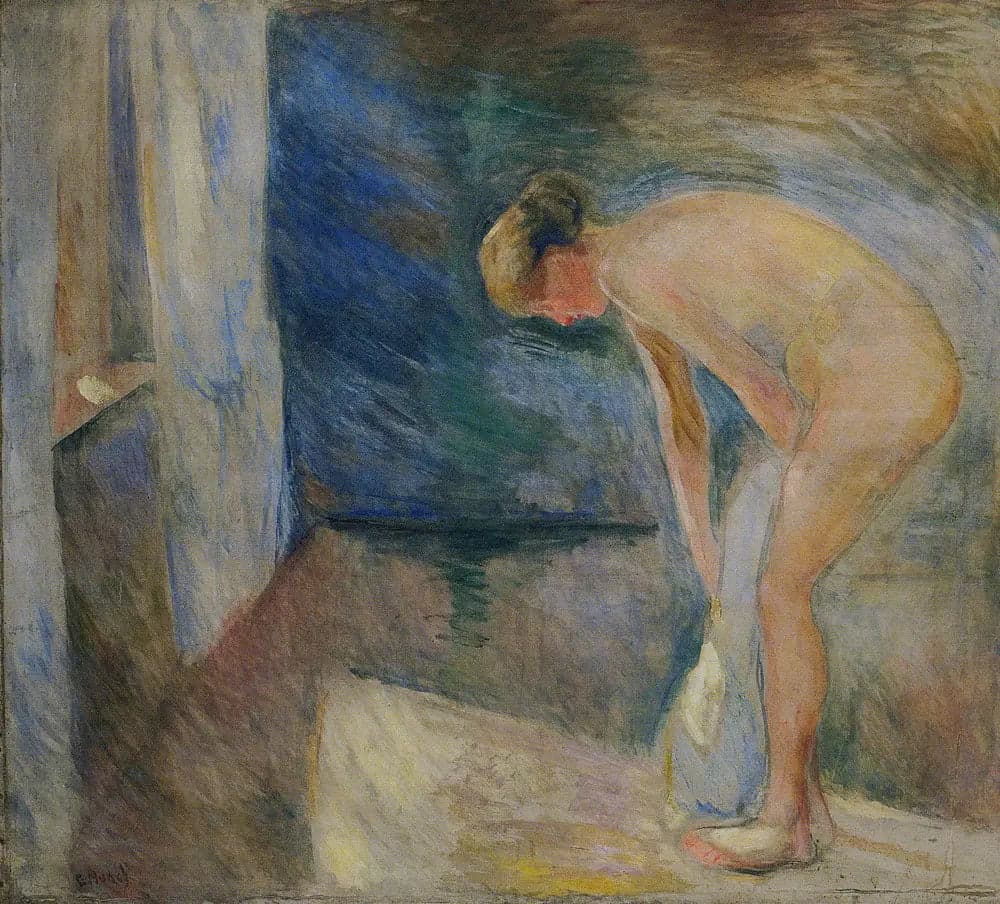
After the Bath
- Original dimensions
- 155 x 119 cm
- Museum
- Not specified
- Year
- 1892
Scene depicted
The painting “After the Bath” reveals an evocative scene of feminine intimacy. A woman awakens from the water, surrounded by a halo of soft, caressing light, symbolizing rebirth and tranquility. The canvas captures a fleeting moment of serenity, while the emotional tension simmers beneath the surface, making the composition both soothing and unsettling.
Historical context
Created in 1892, during a period of artistic upheaval in Oslo, After the Bath illustrates the emotional power of the expressionist movement. This iconic painting reflects the intensity of life at the end of the 19th century, a time when art began to break free from conventions. Currently, this painting is preserved in a private collection, its vibrant imprint continuing to fascinate art lovers.
Place in the artist's career
After the Bath represents a key milestone in Munch's career, where he masters the expression of emotions through bold compositions. This painting bridges the exemplary beginnings of works such as The Scream and The Madonna , demonstrating his ability to immerse himself in the human soul with renewed depth.
Anecdote
“Painting is a scream in the night,” said Munch, thus depicting his inspiration during a misty morning by a lake. It is there, under a light diffused by melancholy, that the artist captured the vibrant and delicate essence of the human body, resulting in this masterpiece filled with emotions, situated in a space that is both intimate and universal.