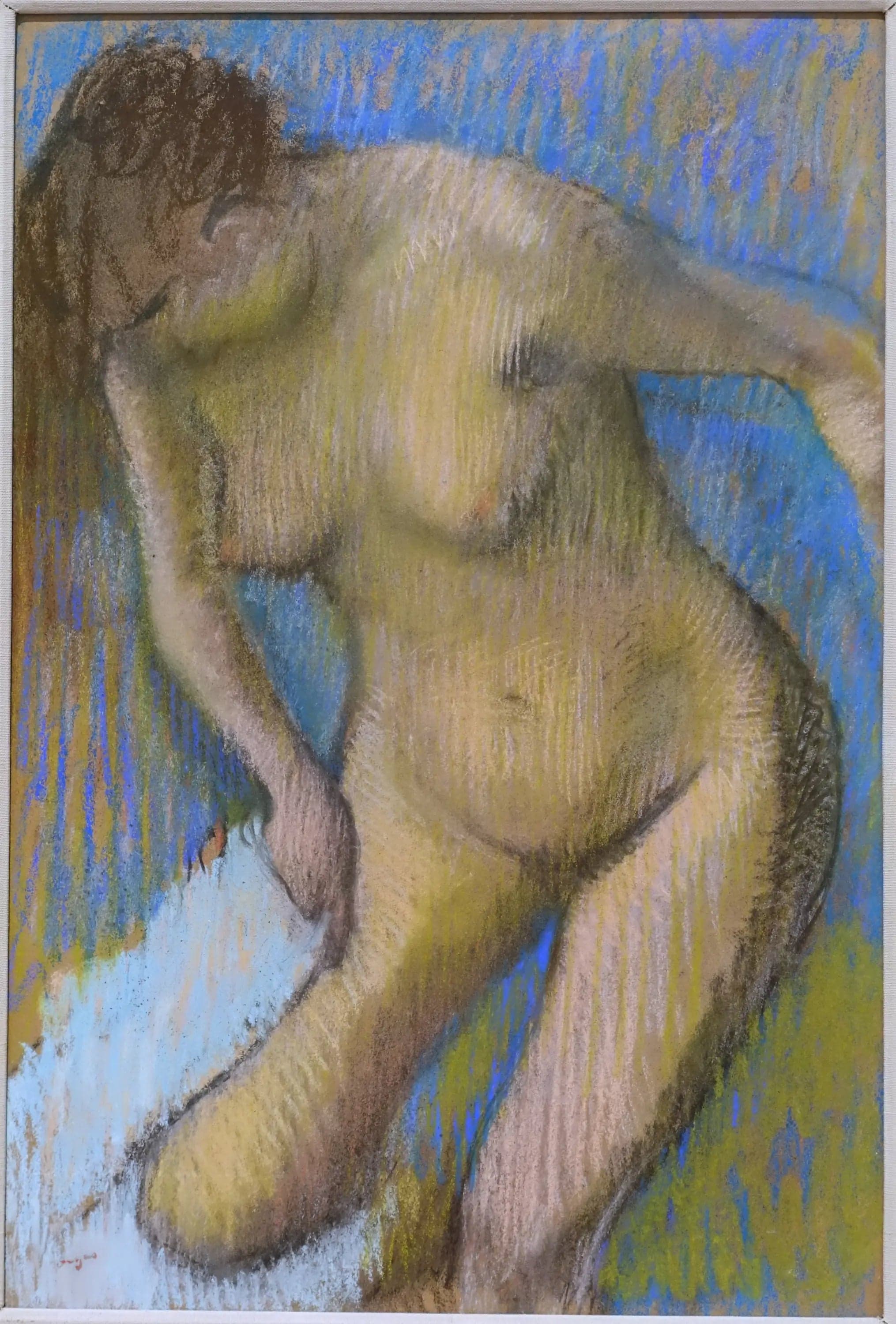
After the Bath
- Original dimensions
- 822 x 657 cm
- Museum
- Getty Center
- Year
- 1895
Scene depicted
In this pictorial work, Degas immerses us in the daily life of a woman who, after the bath, allows herself to be enveloped by the warm, humid air. The composition invites us to observe the intimacy of this moment and the softness of the light that caresses the model's skin. The nonchalant and natural attitude of this female figure gives the painting an aura of tranquility and beauty. Here, the painting becomes a faithful reflection of the fleeting beauty of life.
Historical context
Created in 1895, this masterpiece of Impressionist painting is set against the vibrant backdrop of Paris, a city in full artistic effervescence. The work belongs to one of the most innovative movements of the time, where artists like Degas explore everyday life. The painting is now housed in the prestigious Getty Center in California, testament to the importance of this heritage that continues to inspire. Its majestic dimensions of 822 x 657 cm give it a unique presence that captivates the eye.
Place in the artist's career
"After the Bath" stands as a milestone in Degas's career, illustrating both his fascination with the moving body and his technical skill. This painting follows works such as "The Dancer at the Star" and "The Ballet," where he explores themes of dance and sensuality. This canvas is distinguished by its emotional depth and mastery of light, marking a period of artistic maturity recognized in Degas.
Anecdote
Edgar Degas , passionate about movement and capturing fleeting moments, reportedly said: "Dance is life!" This quote resonates intensely within the intimacy of his painting, where the serenity of a woman emerging from the bath evokes a freshness imbued with grace. The moment of inspiration may have been a quiet morning, near the golden light of the sun, where the artist encountered the beauty of femininity in all its simplicity.