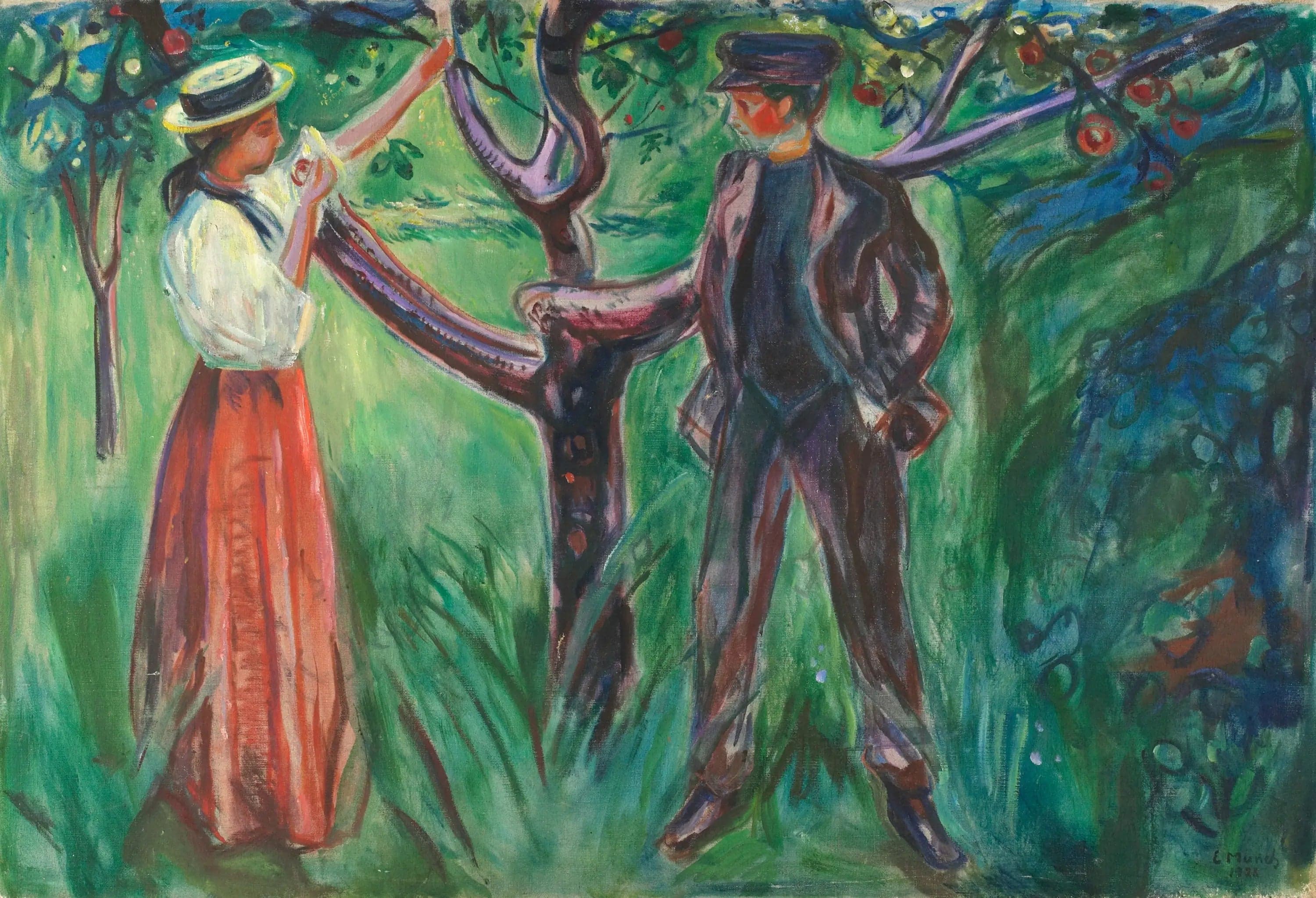
Adam and Eve
- Original dimensions
- 160 x 109.5 cm
- Museum
- Munch Museum
- Year
- 1928
Scene depicted
In this pictorial work, Munch offers us a poignant representation of the myth of Adam and Eve, symbolizing lost perfection and innocence in the face of knowledge. The figures stand in vibrant nature, evoking the first emotions of humanity, where light and shadow create a powerful inner dialogue, a reflection of the complexities of existence.
Historical context
Created in 1928, in Oslo, this painting is part of the expressionist movement. Adam and Eve reflects a time when art engages in a quest for raw and authentic emotions. Currently, this canvas resides in the Munch Museum, offering visitors a dive into this tragic and poetic universe, reminding us of humanity's inner struggle.
Place in the artist's career
Adam and Eve stands as a significant milestone in Munch's career, illustrating a turn towards artistic maturity. Through this canvas , the viewer can draw parallels with his other works, such as The Scream and The Madonna , where his exploration of themes of anxiety and love unfolds with poignant intensity.
Anecdote
Edvard Munch once said: “Art is not something to be seen, but something to be felt.” This sentiment may emerge from a spring morning, with a gentle breeze in the streets of Oslo, where visions of solitude and love intertwined. Thus, the painting Adam and Eve engages our minds to explore the duality of the human condition.