Absinthe
- Original dimensions
- 680 x 920 cm
- Movement
- impressionism
- Museum
- musée d'Orsay
- Year
- 1875
Scene depicted
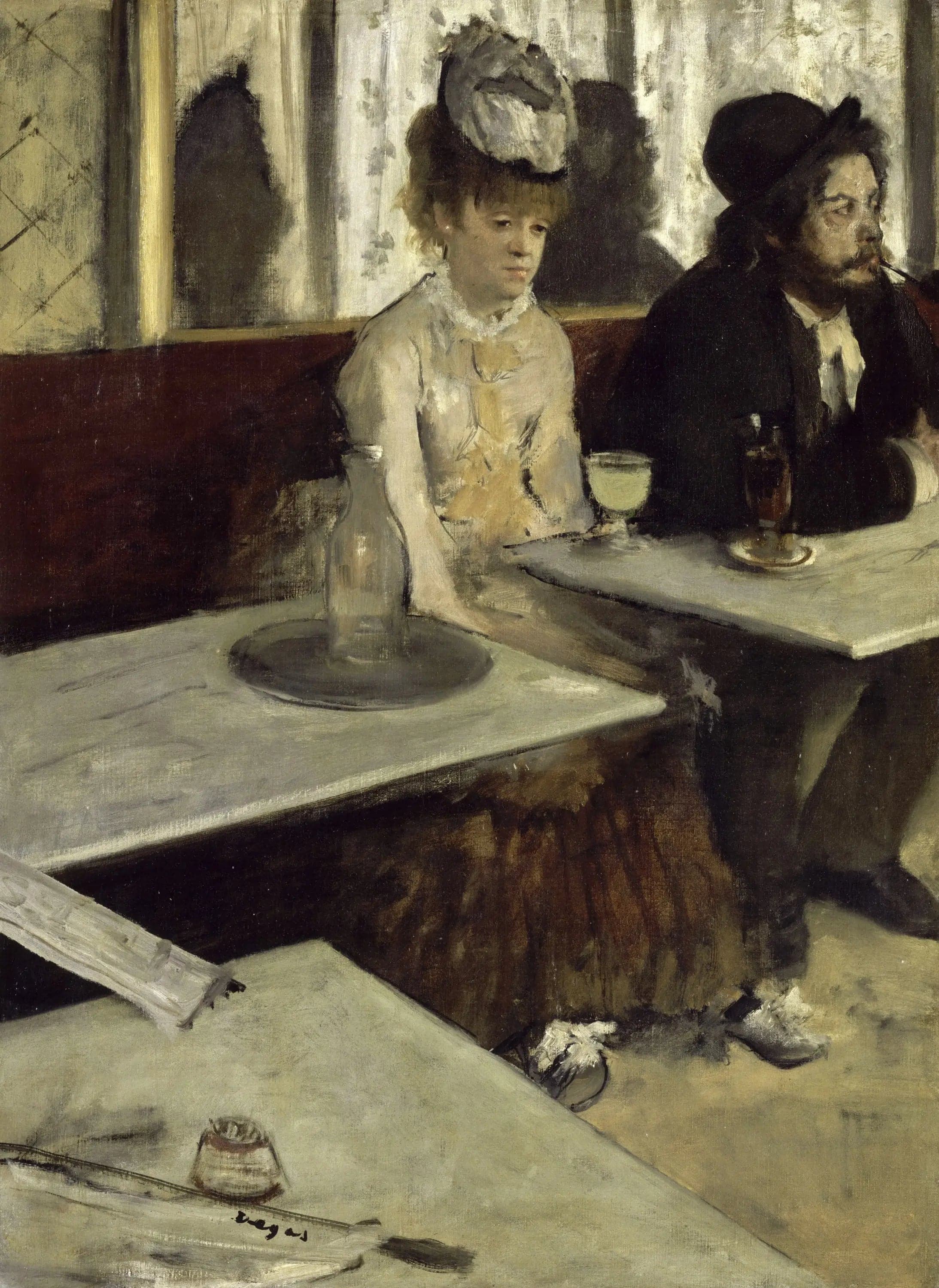
In L'Absinthe , Degas depicts an enigmatic scene, where a woman, sitting at a table, stares into the void with a penetrating gaze. Beside her, a man is lost in thought, as if suspended in a timeless space. The café, a meeting place, becomes the stage for deep introspection, revealing the paradoxes of modern life, between disenchantment and the quest for escape.
Historical context
This painting emblematic, created in 1875, plunges the viewer into Paris at the end of the 19th century, where impressionism , then in full swing, upsets artistic conventions. The painting is now preserved at the musée d'Orsay , testifying to the artistic legacy of Edgar Degas in a city that shaped his art. Through its generous dimensions, this canvas captures the essence of an era where light and urban movements coexist in a vibrant harmony.
Place in the artist's career
L'Absinthe marks a crucial step in the career of Edgar Degas , a passage towards a defined artistic maturity. In parallel with other emblematic works like The Dance Class and The Dancers at Rest , the painting illustrates Edgar's evolution, oscillating between bold colorism and technical prowess, thus measuring the emotional weight of Parisian life.
Anecdote
Edgar Degas , an insatiable observer, once confessed: "I am less a painter than an observer of others." Imagine him, that spring morning, wandering through the alleys of Montmartre, crossing faces imbued with melancholy, capturing the fleeting moment that will transform his painting into a masterpiece. L'Absinthe then becomes the reflection of this vibrant solitude, a frozen moment where each brushstroke whispers a silent story.
Major exhibitions
second impressionist exhibition