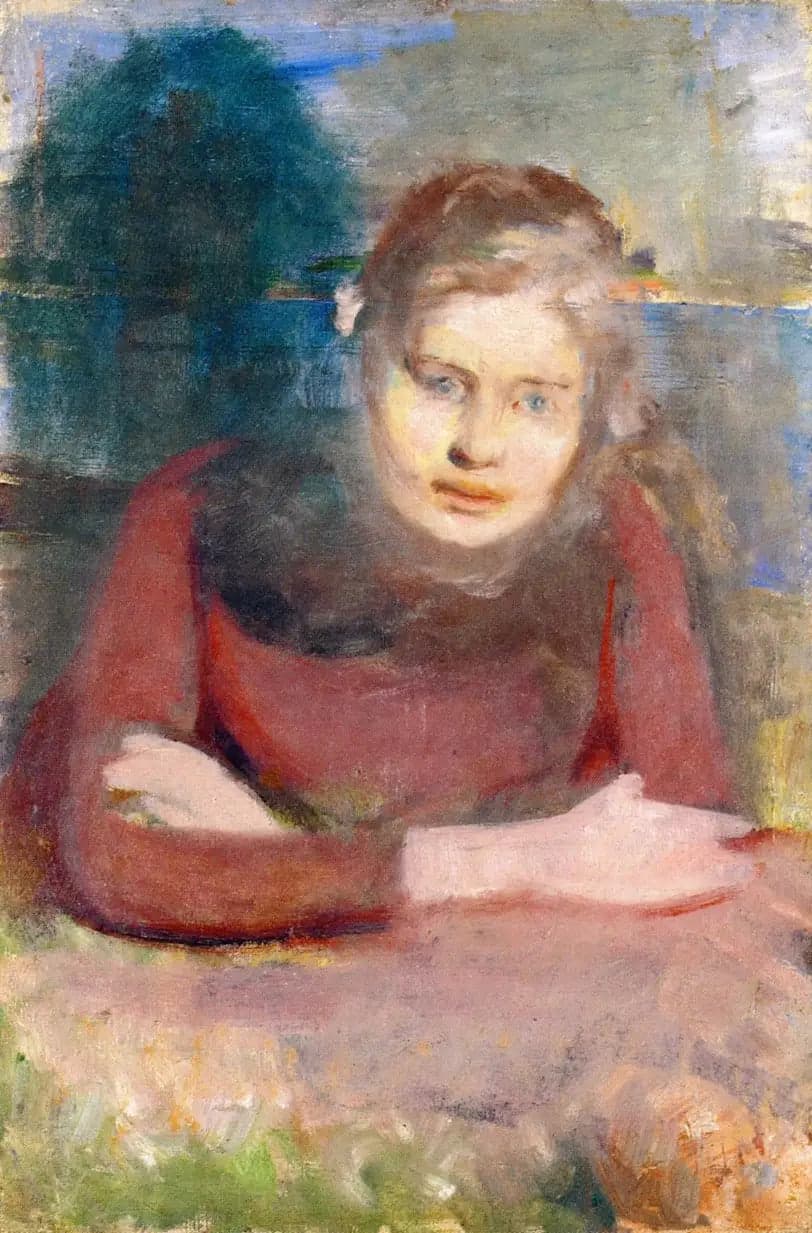
Aasta Carlsen
- Original dimensions
- 30.5 x 46 cm
- Museum
- Munch Museum
- Year
- 1888
Scene depicted
This iconic painting depicts the figure of Aasta Carlsen, a true icon of feelings, who becomes the heroine of a composition where each brushstroke seems to vibrate with energy. The artist, through his masterpiece , immerses the viewer in a visual dialogue, where each nuance evokes its own story, a celebration of femininity and human fragility.
Historical context
Created in 1888, in the vibrant city of Oslo, Aasta Carlsen is part of the symbolism movement, characteristic of the work of Edvard Munch . At that time, the artist sought to explore human emotions through bold and introspective compositions. His painting is currently housed in the Munch Museum, a prominent place for preserving this artistic heritage, reflecting the richness of Scandinavian culture.
Place in the artist's career
Aasta Carlsen represents a significant milestone in Munch's artistic evolution. Situated at a key moment in his career, this painting shows the beginning of his distinctive style that would be further refined in works such as “The Scream” and “The Madonna,” where his mastery of emotions and symbolism reaches its peak.
Anecdote
“Painting is a confession of the soul.” This quote from Edvard Munch resonates deeply when considering the genesis of Aasta Carlsen. Inspired one spring morning by the haunting beauty of a face encountered in the streets of Oslo, Munch captures in his painting a moment of escape, a fleeting encounter filled with emotions.