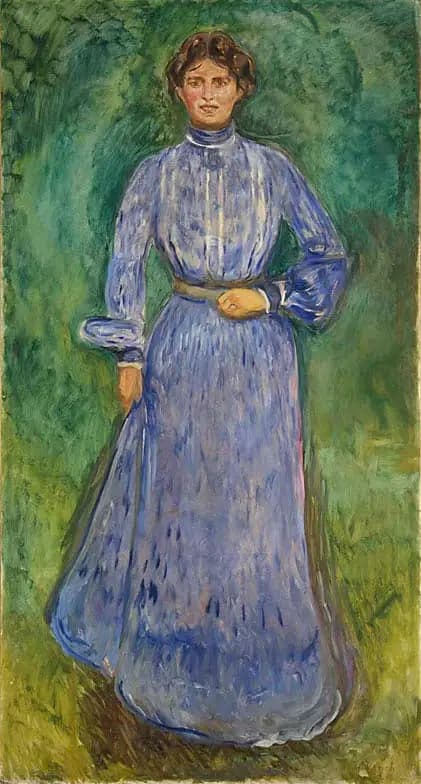
Aase Nørregaard
- Original dimensions
- 109 x 131 cm
- Museum
- National Gallery of Oslo
- Year
- 1899
Scene depicted
This canvas features Aase Nørregaard, a woman whose grace and inner strength illuminate the canvas. Munch, through this pictorial work , brings to life a silhouette imbued with melancholy and beauty. In the distance, the Danish natural landscape seems to fade away, highlighting the intensity of the captured moment, revealing the protagonist's intimate thoughts.
Historical context
Created in 1899, this painting is at the heart of the artistic movements of the late 19th century in Norway. Edvard Munch , a central figure of expressionism, developed this canvas in a rich and complex cultural context, rooted in the dynamic city of Oslo. Today, you can admire this work at the National Gallery of Oslo, a sanctuary of art that houses other major pieces of Nordic art.
Place in the artist's career
Aase Nørregaard represents a turning point in the career of Edvard Munch . This canvas , emanation of his period of emotional exploration, stands alongside other significant works such as "The Scream" and "The Madonna," illustrating his technical evolution towards a freer and more personal expression of his internal emotions.
Anecdote
“Creation is a cry of the soul.” These words from Edvard Munch resonate powerfully in the genesis of his masterpiece . One gentle spring morning, as the filtered light through the trees caressed the faces of the inhabitants, inspiration was born at the turn of a lively alley. The emotional force of the painting Aase Nørregaard comes from this encounter, forever capturing the essence of a fleeting moment.