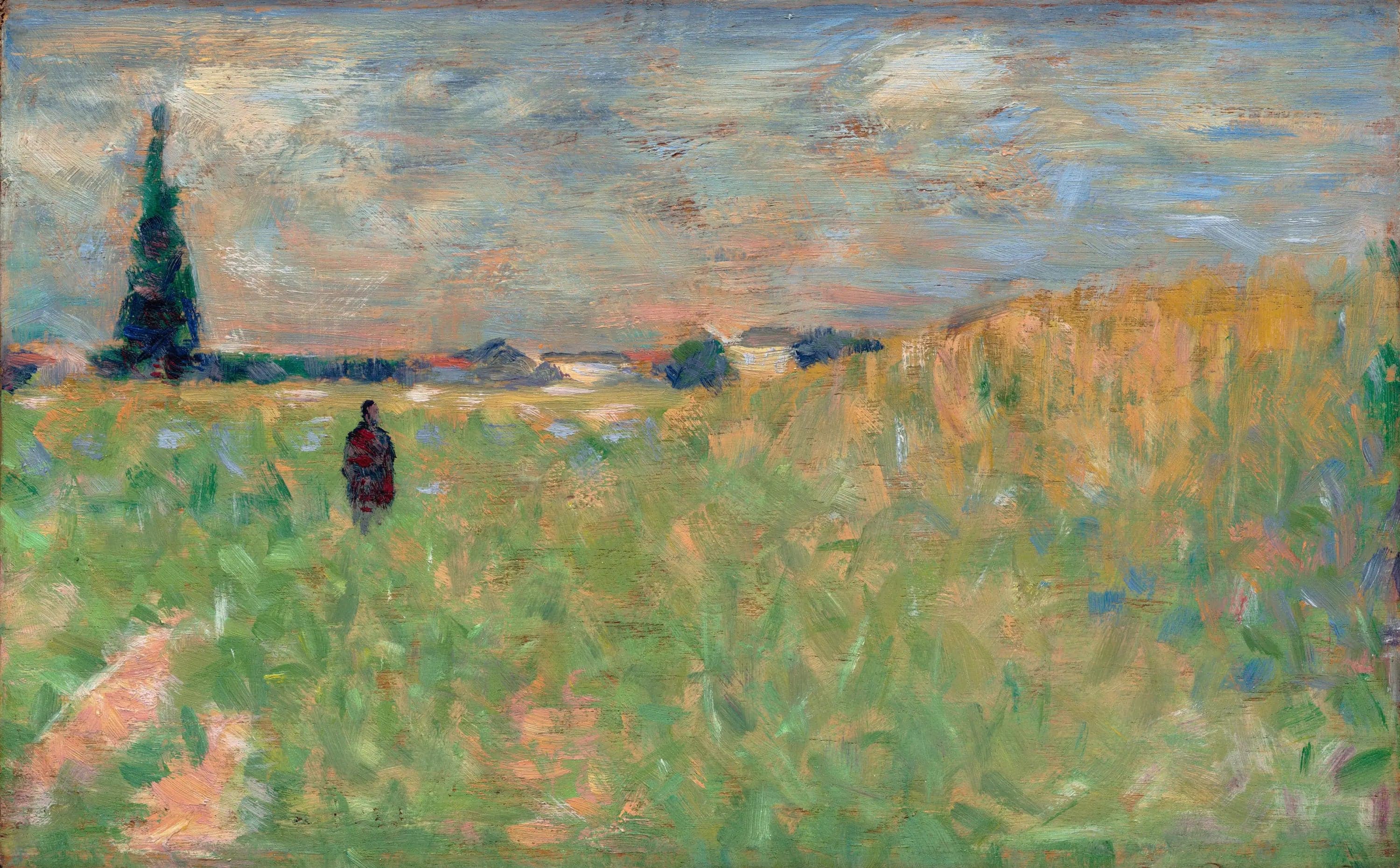
A Summer Landscape
- Original dimensions
- 25.08 x 15.88 cm
- Museum
- National Gallery of Art
- Year
- 1883
Scene depicted
The canvas depicts an idyllic summer scene, where nature flourishes, inviting contemplation. Majestic trees, azure skies, and pigmented light invite one to escape into this bucolic landscape. The viewer is transported into a universe where time seems suspended, and where each brushstroke whispers ancient stories.
Historical context
Created in 1883 in the city of lights, Paris, the painting "A Summer Landscape" is emblematic of pointillism, a revolutionary artistic movement. Seurat, master of this technique, captured the very essence of light and colors of his time, paving the way for a new artistic perception. Today, this canvas is carefully preserved at the National Gallery of Art , where its brilliance continues to amaze visitors from around the world.
Place in the artist's career
"A Summer Landscape" represents a pivotal moment in the career of Georges Seurat , reflecting his commitment to artistic exploration. Alongside his major works like "A Sunday Afternoon on the Island of La Grande Jatte" and "The Dance of Young Girls," this painting highlights the artist's stylistic evolution, moving from immersive observation to luminous abstraction.
Anecdote
Georges Seurat once stated: "Light is color." Imagine the artist, on a fresh spring morning, strolling along the banks of the Seine, absorbing every pulse of a vibrant scene. It is from this encounter between nature and his keen eye that the painting "A Summer Landscape" was born, a pictorial work imbued with serenity and joy.