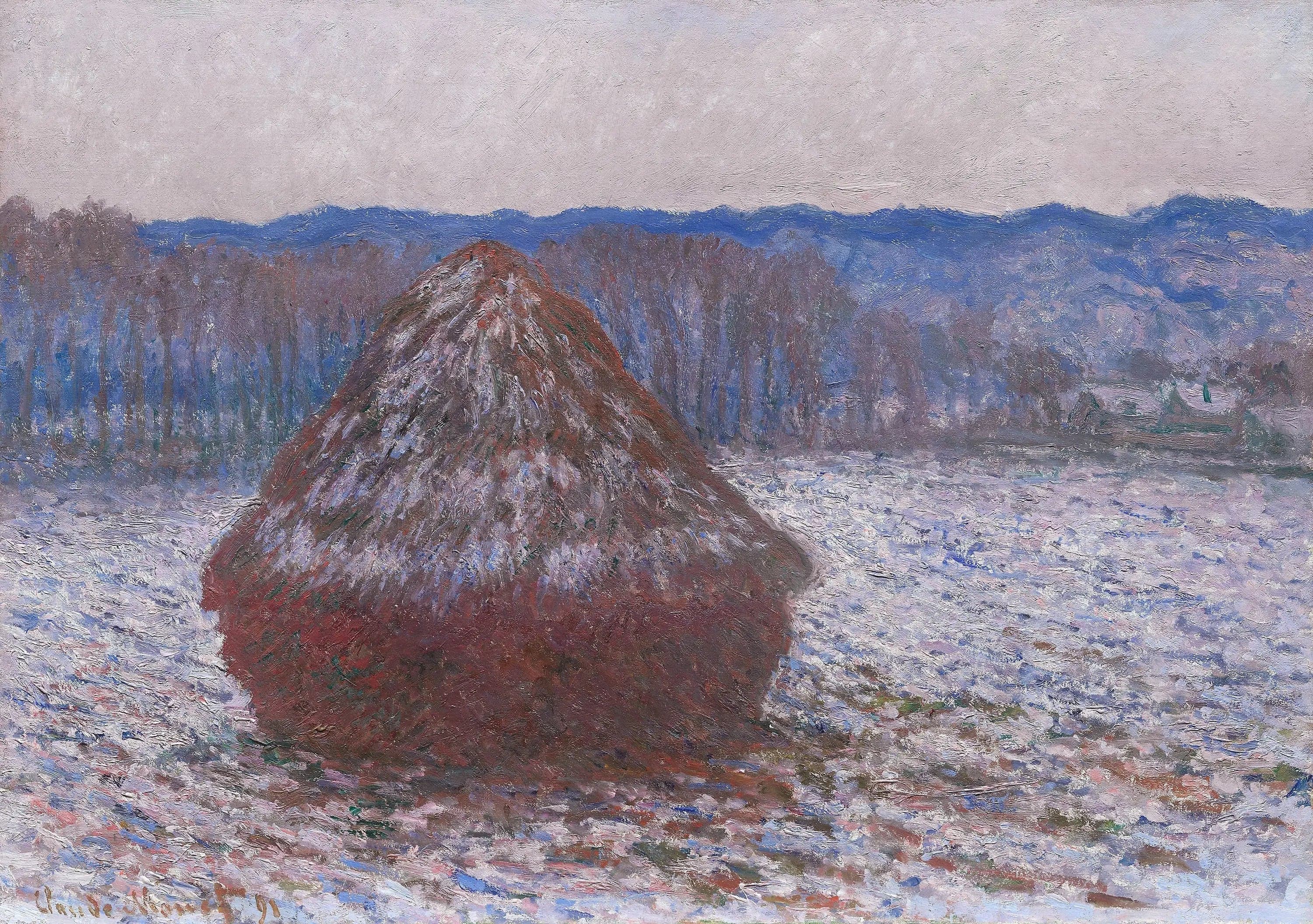
A stack of wheat
- Original dimensions
- 93 x 66 cm
- Museum
- Art Institute of Chicago
- Year
- 1890
Scene depicted
"A Stack of Wheat" depicts a simple yet powerful scene: a pile of golden wheat, a symbol of harvest and the wealth of the land. Patches of light play on the ears of wheat, while the blue sky gently dissolves into cloud masses. This painting, far from a mere representation, is an ode to nature and the beauty of everyday life, a moment frozen in time that tells the story of a season and hard labor.
Historical context
Year: 1890 |BRK| Museum: Art Institute of Chicago |BRK| Dimensions: 93 x 66 cm
Place in the artist's career
"A Stack of Wheat" is part of the peak period of Monet's career, where his techniques refined with impressive mastery. This painting is linked to other major works, such as " Impression, Sunrise " and " The Water Lilies ", each marking a step in the exploration of light and color, while nurturing his lasting legacy within Impressionism.
Anecdote
"Nature is art, and art is my nature," Claude Monet might have declared, inspired by the scene of wheat fields. It was on a May morning, as the mist dissipated and the echoes of birds pierced the silence, that Monet sketched this canvas . The air is fragrant with the warmth of the rising sun, making each brushstroke more alive, each color more vibrant. The painting reproduces this evocative force, a visual symphony of light.