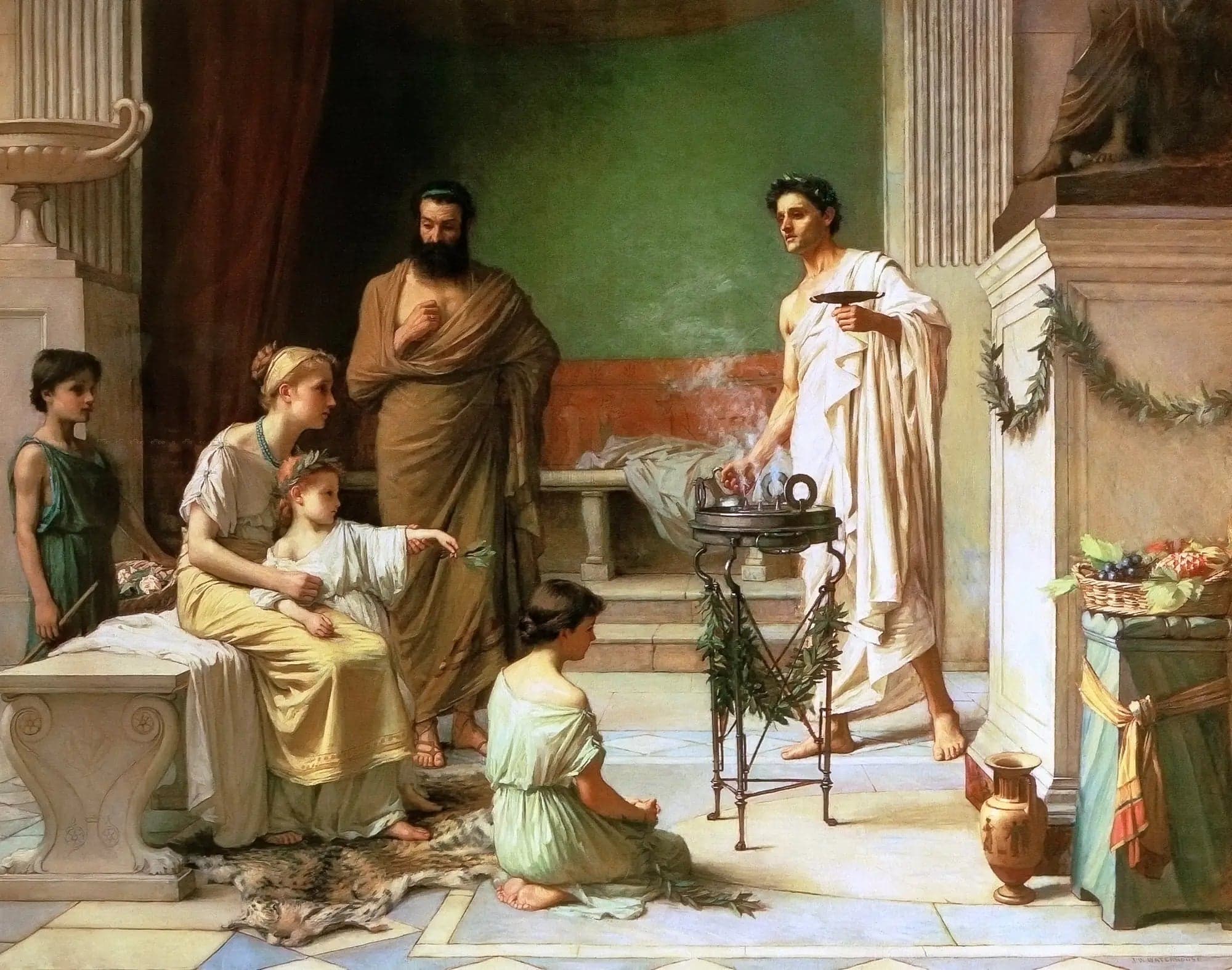
A Sick Child Brought to the Temple of Aesculapius
Scene depicted
This narrative painting immerses us in a poignant scene: a sick child is carried, in a climate of hope, towards the temple of Aesculapius, the god of medicine. At the heart of this composition, the vulnerability of childhood collides with the power of ancient beliefs. The faces surrounding the child testify to a humanity united by prayer and hope, while the muted light evokes a world bathed in the anticipation of a miracle.
Historical context
Created in 1875, this painting emblematic of John William Waterhouse is part of the Pre-Raphaelite movement, an artistic current that emerged in England in the mid-19th century. The work, currently held in a private collection in London, measures 73 cm by 110 cm. It evokes a time when art was imbued with emotion and romanticism, merging mythology and humanity.
Place in the artist's career
This painting , a jewel of Waterhouse's artistic expression, belongs to his mature period. It can be compared to other paintings such as “The Mermaid” and “Mother and Child,” manifesting a stylistic evolution marked by an increasing mastery of light and themes of sacrifice and vulnerability. The soft light, omnipresent in these works, becomes both a narrator and a accomplice of human emotions, a common thread uniting his work.
Anecdote
“Each brushstroke preserves a fleeting emotion, like a memory of a spring day,” said Waterhouse when reflecting on his canvas . Inspired during a walk in a blooming garden, this fleeting moment becomes the fertile ground for the painting . It is this breath of life and feeling that permeates through each character of this masterpiece .