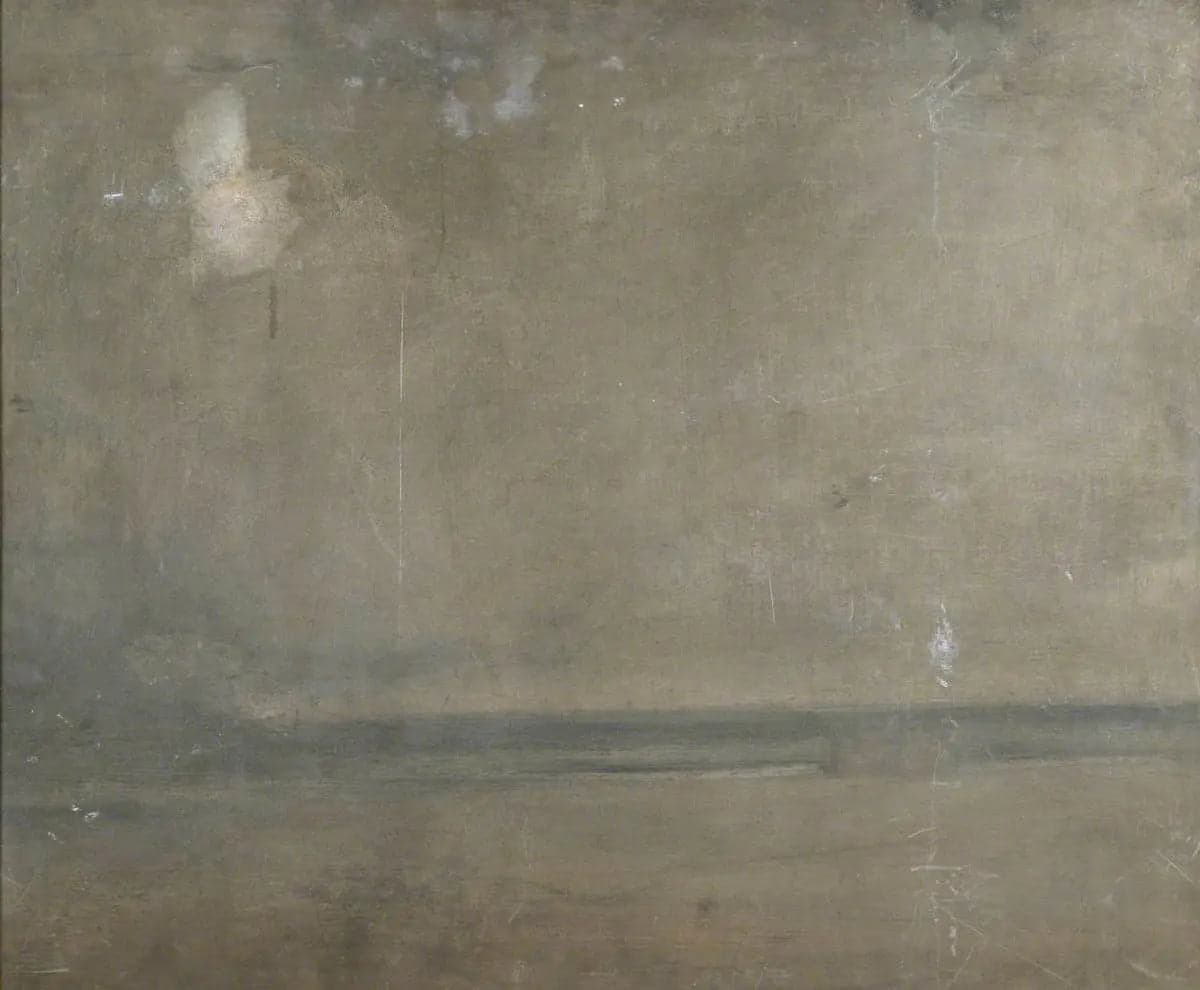
A Seashore
- Original dimensions
- 41.6 x 52.1 cm
- Museum
- Tate
- Year
- 1828
Scene depicted
The painting A Seashore depicts a striking coastal scene, where water, sky, and sand merge in a fluid harmony. The undulation of the waves, caressed by golden light, evokes a narrative of tranquility but also of power. This painting captivates the gaze, immersing the observer in a world where wild nature and serene beauty coexist, capturing attention both through its delicacy and intensity.
Historical context
Created in 1828, the iconic painting A Seashore is part of the romantic movement, an artistic movement that took root in Great Britain during the victorious period. Turner, then on the rise, finds himself in London, where he captures the fleeting beauty of seascapes. Measuring 41.6 x 52.1 cm, this painting is currently on display at the Tate , a world-renowned museum. Each brushstroke testifies to Turner's visionary genius, transcribing a vibrant and lively atmosphere, emanating from the waves of a stormy sea.
Place in the artist's career
A Seashore represents a turning point in Turner's career, revealing an increased mastery of light and color. This masterpiece is situated among other notable works such as The Fighting Temeraire and Rain, Steam and Speed , where one can observe an evolution in Turner's technique, moving from a realistic representation to a more subjective and emotional expression.
Anecdote
“Light is my muse,” Turner is said to have declared while contemplating the soft morning glow. Inspired by a sunrise over untamed shores, he felt that both powerful and delicate moment that drove him to immortalize this ephemeral beauty in the masterpiece that is A Seashore . It is in this communion of elements that the painting naturally imposed itself on him.