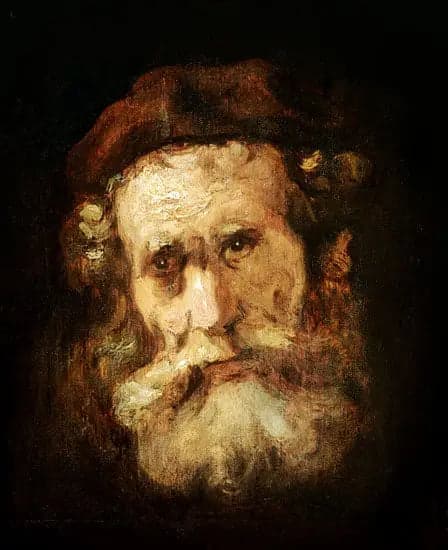
A Rabbi
- Original dimensions
- 22 x 25 cm
- Museum
- Bonnat-Helleu Museum
- Year
- 1650
Scene depicted
The painting “A Rabbi” evokes a suspended moment where the knowledge and depth of Jewish identity are illuminated. In an atmosphere of silent meditation, Rembrandt paints a rabbi absorbed in his thoughts, offering observers a gateway to a rich culture and spirituality, delicately encapsulated in this painting .
Historical context
Created in 1650, this iconic painting sits at the crossroads of Baroque art and Jewish life in Amsterdam. In the warmth of this vibrant city, Rembrandt captured the soul of a < inhabitant > through the prism of sudden and emotive light. Now housed in the Bonnat-Helleu Museum, this canvas resonates with a living story and elevates the observer through its 22 x 25 cm of pictorial wisdom.
Place in the artist's career
This canvas fits into a period of maturity for Rembrandt , where he begins to explore more intensely the contrast between light and darkness. Alongside works like “The Anatomy Lesson of Dr. Tulp” and “The Companions of Ensor,” “A Rabbi” reflects an emotional evolution towards a deeper and more resonant humanity.
Anecdote
“In every face, there is a story to tell,” said Rembrandt one sunny morning, observing a rabbi in the alleys of Amsterdam. The connection between the artist and his subject infused a unique life into this masterpiece , linking the present moment to a timeless spiritual reality.