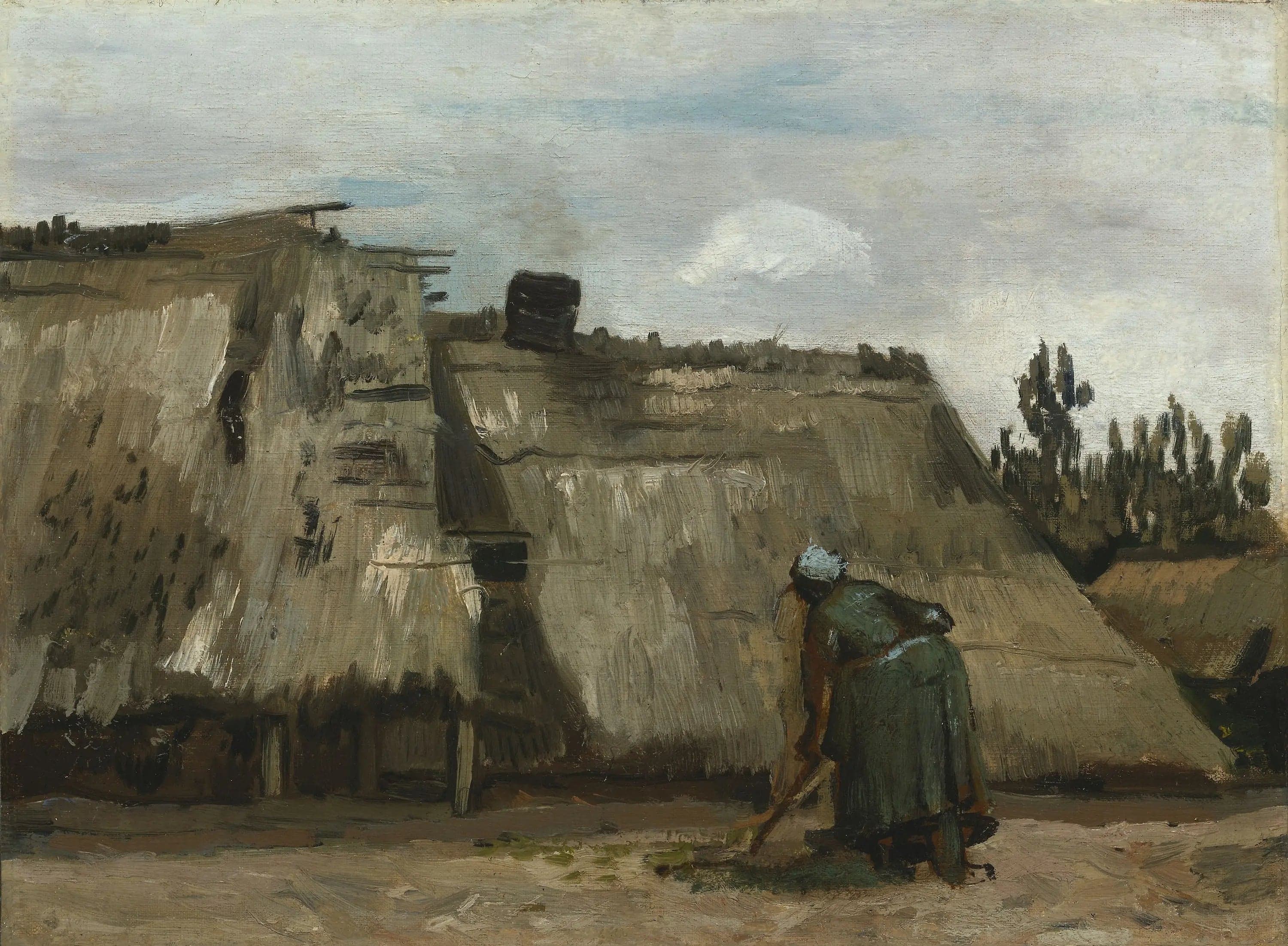
A peasant woman digging in front of her chalet
Scene depicted
In this canvas , the central figure of the peasant is depicted in a moment of devotion to work. The artist captures the very essence of manual labor, highlighting the deep connection between Man and the land that nourishes him. Every detail, every blade of grass, is a tribute to the hard work of rural life, emerging in a vibrant and lively composition.
Historical context
Created in 1885, in the peaceful town of Nuenen , this painting is emblematic of the post-impressionist movement, where Vincent van Gogh began to refine his unique style. Currently, this canvas is housed at the Art Institute of Chicago , measuring 42 x 31.3 cm. The work illustrates peasant society, rooted in the natural rhythm of rural life, a theme dear to the artist at that time.
Place in the artist's career
This painting represents a crucial moment in Van Gogh's career, marking a step towards his artistic maturity. It beautifully dialogues with other works such as “ The Potato Eaters ” and “ The Siesta ”, illustrating his technical and emotional evolution, while highlighting his social concerns regarding the peasant condition.
Anecdote
“I want to paint the worker, this laborious soul who shapes our world.” Such were Van Gogh's thoughts during the creation of this masterpiece , inspired by the moving sight of a peasant digging the earth in front of her chalet, one spring morning, bathed in soft light. His vibrant brushstrokes evoke not only a scene but also the soul of those who live in harmony with nature.