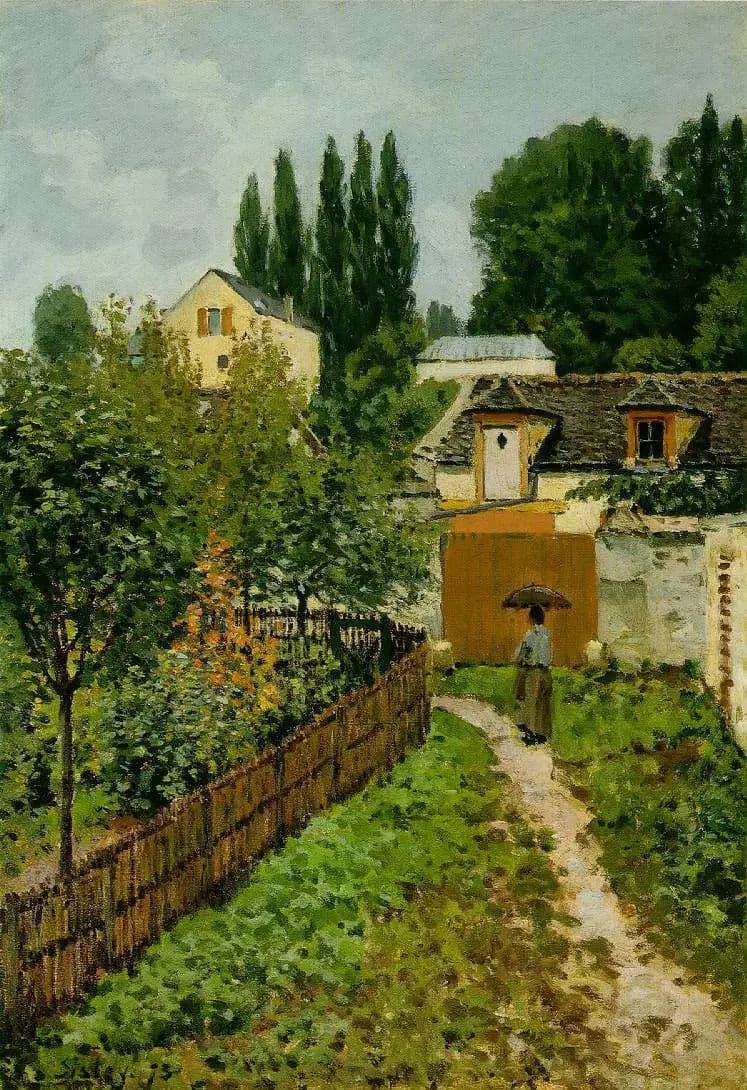
A Garden at Louveciennes
- Original dimensions
- 46 x 65 cm
- Museum
- Not specified
- Year
- 1873
Scene depicted
In this wonderful painting, one can see a lush garden, where colors intertwine in a light dance. Sisley captures the streams of light filtering through the trees, revealing a symphony of vibrant greens and colorful blooms. The scene evokes a bucolic tranquility, a haven of peace away from the hustle and bustle of the city, immersing the viewer in this soothing nature.
Historical context
Created in 1873, this painting is part of the Impressionist movement, characterized by a search for light and color. Sisley paints here the garden of a friend, in Louveciennes, an elegant town in the Paris suburbs. At this time, Paris is undergoing an artistic transformation and Sisley, as a fundamental member of Impressionism , captures the essence of this fleeting moment. This canvas , currently unspecified, is part of the painter's iconic works, measuring 46 x 65 cm.
Place in the artist's career
This painting , representing a key phase in Sisley's career, illustrates both his technical mastery and his dedication to capturing natural beauty. It coincides with other major works, such as Mont Saint-Victoire and The Seine at Louveciennes , revealing a continuous evolution in his style and approach, placing A Garden at Louveciennes as an important milestone in his artistic journey.
Anecdote
Alfred Sisley once said, "Nature is the greatest of artists" while painting A Garden at Louveciennes on a sunny spring morning. His inspiration came from the rustling of leaves, the scent of flowers, and the soft light bathing the garden, making the scene alive and full of emotions. This moment of serenity, coupled with his skill, gives this canvas an unmatched evocative power.
Major exhibitions
1900 World's Fair