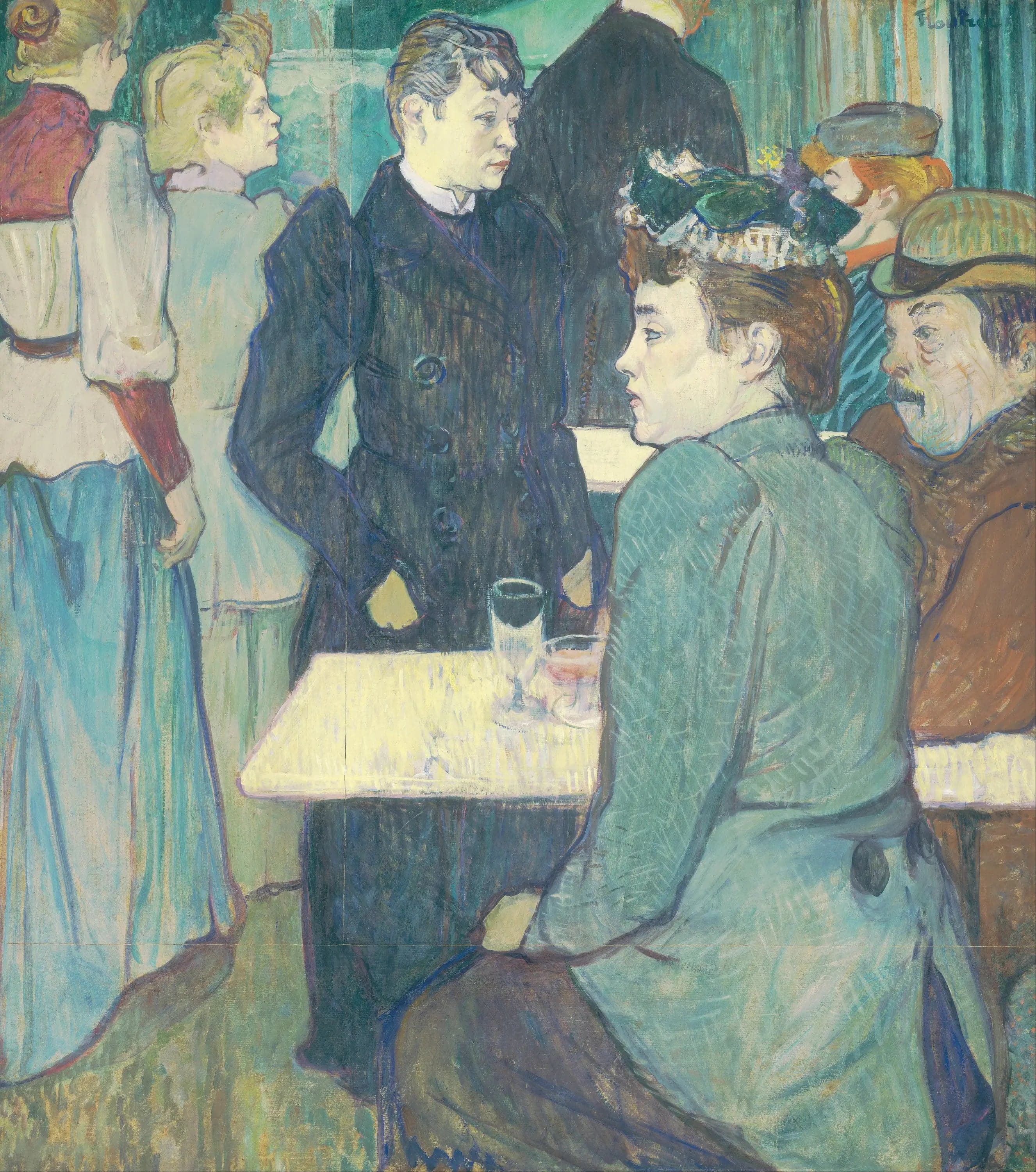
A Corner of the Moulin de la Galette - Henri de Toulouse
- Original dimensions
- 89.2 x 100 cm
- Museum
- National Gallery of Art
- Year
- 1892
Scene depicted
This painting conveys a vibrant scene of the celebration at the Moulin de la Galette, dedicated to the joy of living and the effervescence of Parisian society. The canvas , with its animated characters in natural poses, evokes an atmosphere of complicity and conviviality, transporting the viewer into a suspended moment, right in the heart of life and Parisian pleasures.
Historical context
Created in 1892, this painting embodies its roots in the bohemian district of Montmartre, Paris, a focal point of artistic and cultural life during the Belle Époque. With its post-impressionist style, A Corner of the Moulin de la Galette captured the vibrancy and spirit of an era where the pleasures of daily life were refined through a vibrant palette and lively composition. Currently on display at the National Gallery of Art , this canvas measures an impressive 89.2 x 100 cm, highlighting its visual impact in any space it occupies.
Place in the artist's career
A Corner of the Moulin de la Galette marks a significant milestone in Lautrec's career, illustrating his technical mastery and unique style as he rose to become one of the emblematic representatives of post-impressionism . Alongside works such as The Dance at the Moulin Rouge and Portrait of Jane Avril , this painting testifies to the evolution of his composition, his use of light, and his skill in capturing the very essence of his subjects.
Anecdote
“I have always wanted to capture the expression of lost souls in the light of a moment.” This thought could have emanated from Henri de Toulouse-Lautrec as he immortalized scenes at the Moulin de la Galette. Imagine a spring morning, when the first rays of sunlight dance on the faces of dancers, and where every murmur of laughter enhances the reality of his pictorial works, forever symbolizing the fleeting moments of life.