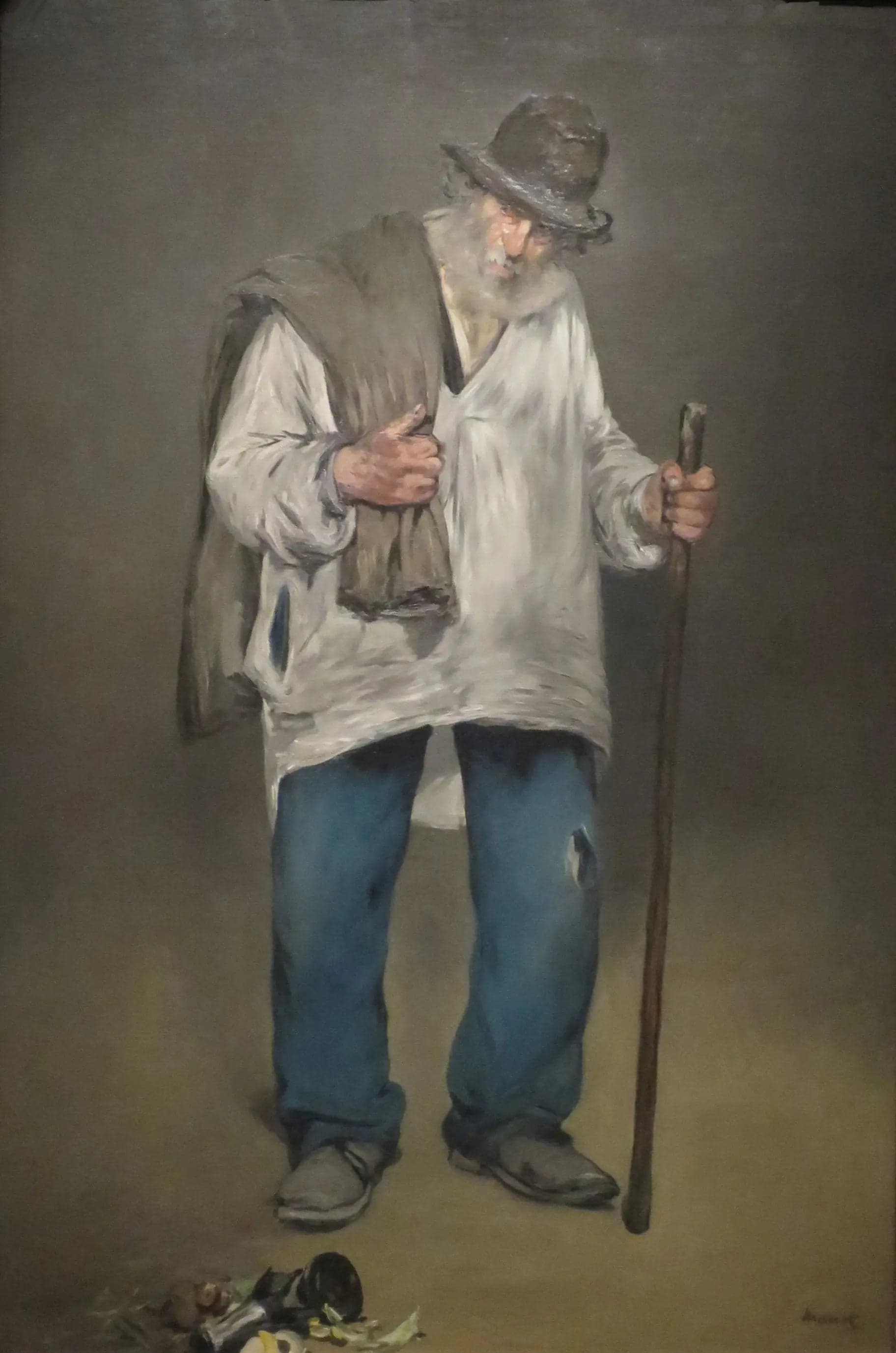
A Beggar
- Original dimensions
- 130.8 x 194.9 cm
- Museum
- Norton Simon Museum
- Year
- 1867
Scene depicted
The painting “A Beggar” strikingly depicts a seated man, hand outstretched, calling for compassion. His gaze, filled with despair, seems to question passersby while evoking a wounded humanity. The story of this masterpiece lies in this simple yet poignant representation of misery, revealing the social tensions of its time.
Historical context
Created in 1867, this iconic work is set against the backdrop of 19th century Paris, a time marked by the Impressionist movement. Édouard Manet , a central figure of this artistic current, captured everyday life with a new sensitivity. This painting is currently on display at the Norton Simon Museum in California, where it continues to amaze visitors with its evocative power.
Place in the artist's career
As a symbol of a significant phase in Manet's career, “A Beggar” illustrates his desire to break the conventions of academic painting. Alongside “Luncheon on the Grass” and “Olympia,” this painting represents his artistic boldness and the emergence of an innovative style that paved the way for pictorial modernity.
Anecdote
“The truth is in the light,” Manet might have said. It is at the turn of a charming alley, in the early morning, that he would have encountered a beggar whose shadowed face told a multitude of stories. This fleeting encounter inspired him to create this masterpiece , where the soul of the individual intertwines with light and shadow, capturing the human condition in all its depth.